August 25, 2026


If you have dark or medium-brown skin, you may wonder whether Laser Hair Removal is actually safe for you. The concern is understandable because darker skin contains more melanin, which can also absorb laser energy. Choosing the Best Laser Hair Removal Treatment for Pakistani Skin Types therefore isn’t simply about finding the most powerful machine it’s about selecting the right wavelength, settings, cooling system, and experienced practitioner for your individual skin and hair.
For many Pakistani patients, long-pulsed Nd:YAG and certain diode laser systems can provide effective hair reduction when used with appropriate parameters. Clinical research specifically examining skin of colour supports the use of longer wavelengths and carefully adjusted treatment protocols.
Pakistani skin can fall across several Fitzpatrick skin types, commonly ranging from III to V and sometimes VI. That means two Pakistani patients can have very different responses to the same laser treatment.
The laser needs to target melanin inside the hair follicle while limiting unnecessary heating of the surrounding skin. This becomes particularly important when treating areas with naturally deeper pigmentation, such as the underarms and bikini area.
Darker skin is more susceptible to unwanted pigmentation changes or burns if inappropriate settings are used. The American Academy of Dermatology recommends working with a dermatologist experienced in treating darker skin with lasers.
There isn’t one laser that is automatically best for every Pakistani patient. However, long-pulsed Nd: YAG at 1064 nm is widely regarded as one of the safer options for darker skin tones because its longer wavelength is less strongly absorbed by epidermal melanin and can reach the hair follicle more deeply.
Diode lasers, commonly operating around 810 nm, can also be used successfully in darker skin when the wavelength, fluence, pulse duration, and cooling are appropriately selected. Research has found both Nd: YAG and diode systems useful for hair reduction in darker Fitzpatrick skin types.
| Laser | Common wavelength | Suitability for Pakistani skin | Key consideration |
| Nd:YAG | 1064 nm | Excellent option for darker skin | Often preferred when pigmentation risk is a major concern |
| Diode | ~810 nm | Can be suitable | Settings and cooling are particularly important |
| Alexandrite | 755 nm | More suitable for lighter skin types | Requires careful assessment in darker skin |
| IPL | Broad spectrum | Variable | Not technically a laser and may not be the first choice for every darker skin type |
The important point is that the machine name alone doesn’t determine treatment quality. A skilled clinician should assess your Fitzpatrick skin type, hair thickness, treatment area, recent sun exposure, and history of pigmentation before selecting treatment parameters.
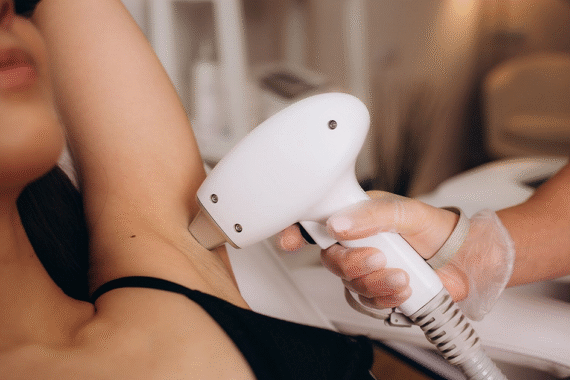
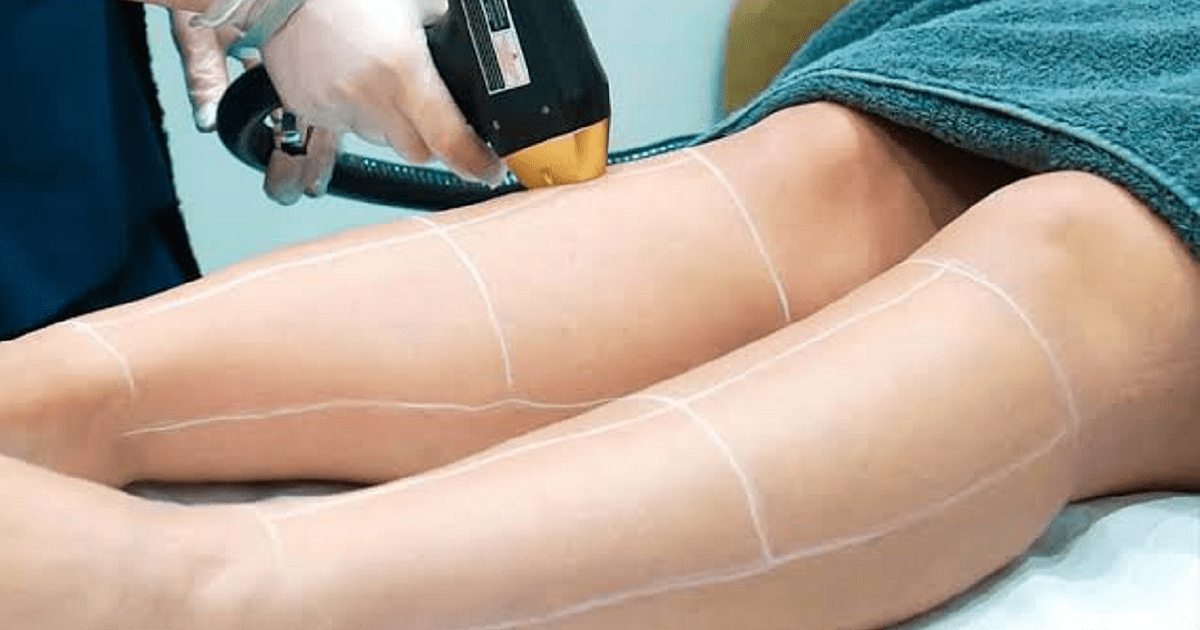
Laser hair removal uses concentrated light energy that is absorbed by pigment in the hair. The energy converts into heat and damages the hair follicle, reducing its ability to produce hair.
Because hair grows through different phases, one treatment cannot effectively target every follicle at the same time. That’s why a course of treatments is normally required rather than expecting complete results after one session.
Hair colour also matters. Dark, coarse hair generally responds better because it provides a stronger target for the laser. Very light, grey or white hair may respond poorly because it contains little or no melanin.
A typical professional laser hair removal session involves:
A mild sensation of heat, snapping, or stinging can occur, although comfort varies depending on the area and individual sensitivity.
At Dr. Afsheen Bilal’s practice, Candela Laser Hair Removal is listed among the procedures offered. Her official clinic information identifies her as a consultant dermatologist and laser specialist, with the practice based in F-7/2, Islamabad.
The value of a medical laser treatment isn’t simply the brand of equipment. Proper patient assessment and parameter selection are equally important, particularly for Pakistani skin where excessive energy can increase the risk of pigmentation changes.
For someone considering Laser Hair Removal in Islamabad, asking which wavelength will be used for your particular skin type—and why—is more useful than simply asking which machine is “the latest.”
You may be a suitable candidate if you:
Laser hair removal may also be helpful for people who experience recurrent follicular irritation from shaving. Research has reported benefits for pseudofolliculitis in darker skin populations.
A consultation is particularly important if you:
Certain hormonal conditions can also contribute to excessive hair growth. Laser can reduce existing hair, but it doesn’t necessarily address the underlying hormonal cause.
The number of sessions varies according to the treatment area, hair thickness, hair-growth cycle, hormones and individual response.
You may notice some reduction after the first few sessions, but meaningful improvement generally requires a planned series of treatments. Maintenance sessions may also be needed because laser hair removal is better described as long-term hair reduction, rather than a guarantee that every treated hair will disappear permanently.
The cost of laser hair removal in Islamabad varies from clinic to clinic and depends on several factors, including:
For that reason, a single advertised price shouldn’t be the deciding factor when choosing a provider. Ask what technology is being used, who performs the procedure, whether your skin type is assessed beforehand, and what is included in the quoted treatment plan.
A cheaper session isn’t necessarily better value if the treatment is poorly matched to your skin.
Skin tone varies considerably. The appropriate wavelength and settings should be individualised.
Recent tanning can change how the skin responds to laser energy and may increase the risk of complications. Sun protection before and after treatment is important.
Hair follicles are treated during particular growth phases, so multiple sessions are normally necessary.
Very fine facial hair may respond differently from coarse terminal hair. A proper assessment is important before treating areas dominated by fine “peach fuzz.”
After treatment:
Temporary redness or mild swelling around follicles can occur after treatment, but significant or persistent reactions should be assessed.
Yes, laser hair removal can be performed safely on darker skin when the appropriate technology and treatment parameters are used. However, darker skin has a higher risk of burns and post-inflammatory pigmentation if treatment is poorly selected or overly aggressive.
This is why choosing the Best Laser Hair Removal Clinic in Islamabad shouldn’t be based solely on equipment or online advertisements. Look for appropriate medical supervision, experience with darker skin, proper consultation, and an individualised treatment plan.
How Does Laser Hair Removal Work on Pakistani Skin?
The laser targets pigment within the hair follicle and converts light energy into heat. The goal is to damage the follicle while protecting the surrounding skin. Longer wavelengths such as Nd: YAG can be particularly useful for darker skin.
Is Nd:YAG Better than Diode for Pakistani Skin?
Not necessarily for everyone. Nd: YAG is often favoured for darker skin because of its longer wavelength, but diode lasers can also be effective when correctly selected and adjusted. Your skin type, hair thickness, and treatment area should guide the decision.
Is Laser Hair Removal Safe for Dark Skin?
It can be. However, darker skin requires careful parameter selection because there is a greater risk of pigmentation changes and burns.
How Long Do Laser Hair Removal Results Last?
Laser treatment provides long-term hair reduction rather than guaranteeing permanent removal of every hair. Some follicles can become active again over time, so maintenance treatments may be necessary.
Is Laser Hair Removal Worth It?
For people who regularly shave, wax or thread and want substantial long-term hair reduction, it can be worthwhile. The best candidates understand that results require multiple sessions and that outcomes vary.
How Much Does Laser Hair Removal Cost in Islamabad?
There is no universal price. Cost depends on the area being treated, hair density, laser technology, number of sessions and individual treatment requirements. A consultation is the most reliable way to receive an appropriate treatment plan and quotation.
What Should I Expect Before and After Treatment?
Before treatment, your skin and hair should be assessed and your laser settings selected accordingly. After treatment, mild redness or follicular swelling may occur temporarily. Sun protection and following your clinician’s aftercare instructions are important.
The Best Laser Hair Removal Treatment for Pakistani Skin Types isn’t necessarily the newest machine or the cheapest package. It’s the treatment that matches your skin tone, hair characteristics and treatment area while using carefully selected parameters under experienced medical supervision.
Nd:YAG is an important option for darker Pakistani skin, while diode and other technologies may be appropriate for selected patients. The real difference comes from proper assessment, suitable technology, controlled energy settings, cooling, realistic expectations and consistent follow-up.
If you’re considering Laser Hair Removal in Islamabad, Dr. Afsheen Bilal is a dermatologist you can consult to discuss your skin type, hair characteristics, and the most appropriate laser approach for your needs. A personalized treatment plan can help achieve effective hair reduction while prioritizing skin safety rather than relying on a one-size-fits-all laser package.