Smoother Skin, Treated the Right Way for Your Scars
Not all acne scars are the same, and they don’t all heal the same way either. Some scars are deep and narrow. Some are wide and shallow. Some are just dark marks left behind after a breakout. That’s why acne scar treatment in Islamabad works best when your doctor looks at your scars closely first, instead of offering one fixed package to everyone.
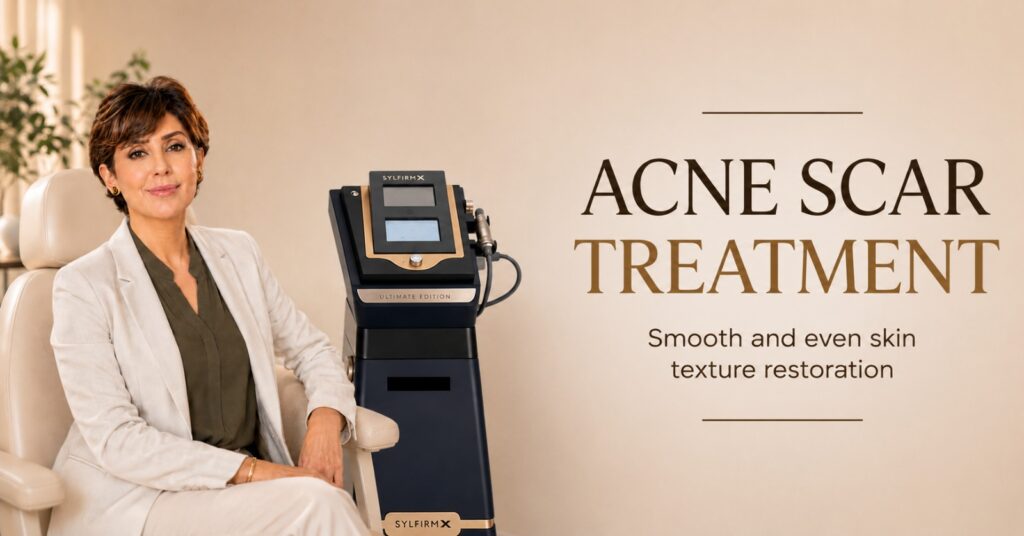
At ARB Clinic, Dr. Afsheen Bilal builds every treatment plan herself. She has 21 years of experience as a dermatologist. She looks at your scars, figures out what type they are, and then chooses the right mix of laser, microneedling, peels, or fillers for you.
The goal is simple: smoother, more even skin, using the treatment that actually fits your scars, not the one that’s easiest to sell you.
Acne Scar Treatment at ARB Clinic
Treatment | Acne scar treatment using laser, microneedling, injectables as needed |
Clinic | ARB Clinic Islamabad |
Specialist | Dr. Afsheen Bilal, MBBS Gold Medalist, FCPS Dermatology, 21 years of experience |
Location | House A-58, Main Margalla Road, F-7/2, Islamabad |
Session time | 20 to 60 minutes, depending on the treatment |
Best for | Ice pick, boxcar, and rolling scars, raised scars, and dark marks from old acne |
Downtime | None to a few days, depending on the treatment |
Results timeline | You start seeing change in 4 to 8 weeks; full results in 3 to 6 months |
Starting price | Confirmed after your consultation, based on your treatment plan |
What Are Acne Scars?
Acne scars form when a breakout goes deep into the skin and damages the tissue underneath. Depending on how bad the acne was, and how your skin healed, scarring can look different for different people.
What are the different types of acne scars?
- Sunken Scars: These happen when the skin loses collagen underneath. This includes ice pick scars (small, deep holes), boxcar scars (wider dents with sharp edges), and rolling scars (a wavy, uneven look).
- Raised Scars: These are raised bumps that form when the skin makes too much collagen while healing.
- Dark Marks (Post-Acne Marks): These are the dark or reddish marks left behind after a breakout heals. They often fade on their own, but treatment can speed that up.
Most people don’t just have one type. Most people have a mix. That’s exactly why a proper skin check matters more than picking a treatment off a list on your own.
Acne Scar Treatment Options, What’s the Difference?
At ARB Clinic, the treatment you get depends on your scar type, your skin, and your goals. Here’s a simple breakdown of the main options.
Treatment | Best For | How Long It Takes |
Laser Resurfacing | Deep scars that need an overall texture improvement | 3 to 6 sessions, 4 to 6 weeks apart |
Microneedling with PRP | Shallow, rolling scars and general skin repair | 3 to 6 sessions, 3 to 4 weeks apart |
Dermal Fillers | Rolling and boxcar scars that need quick volume | Repeated every 6 to 18 months |
Subcision | Deep rolling scars stuck to the tissue below | 1 to 3 sessions, often paired with other treatments |
TCA Cross | Ice pick and other narrow, deep scars | 3 to 4 sessions, 4 to 6 weeks apart |
RF Microneedling | Mixed scar types that need texture and tightening | 3 to 4 sessions, 4 weeks apart |
Most patients get better results from combining two or more treatments instead of using just one. Dr. Afsheen Bilal will tell you the right combination for your skin at your consultation.
Will I need more than one treatment for acne scars?
Often, yes. If you have rolling scars, you might need subcision along with microneedling. If you have both ice pick scars and dark marks, you might need TCA Cross along with a chemical peel. Combining treatments is normal here, not the exception.
The Technology Behind Your Treatment
At ARB Clinic, your treatment plan often uses the clinic’s own laser and skin devices, chosen to match your scars. This can include Sylfirm X RF Microneedling for texture and tightening, Helios Pico laser for dark marks and pigmentation, and Morpheus8 for deeper collagen repair in tougher scarring.
Which device will actually be used on my skin?
That depends fully on your scar type and skin condition, and Dr. Afsheen Bilal will confirm this at your consultation. Someone with mostly dark marks may need a very different device than someone with deep, pitted scars.
Why Choose Dr. Afsheen Bilal for Acne Scar Treatment in Islamabad?
Your Plan Is Built Personally by Dr. Afsheen Bilal
She is an MBBS Gold Medalist, holds an FCPS in Dermatology, and has 21 years of hands-on experience. She checks your scars and builds your plan herself, she doesn’t hand this off to a technician.
A Mix of Treatments, Not One Fixed Package
Most people with acne scars have more than one scar type. Plans here are built by combining treatments where needed, instead of selling the same single treatment to every patient.
Careful Settings for Pakistani and South Asian Skin
Medium to deep skin tones have a higher chance of dark marks appearing if lasers or peels are too strong. Settings here are kept gentle and careful to avoid this.
Honest Timelines From the Start
Acne scar treatment takes time, and almost always needs more than one session. You’ll know what to expect before you start, not halfway through.
Book Your Consultation With Dr. Afsheen Bilal
Who Is a Good Candidate for Acne Scar Treatment?
You may be a good fit if you:
- Have visible scarring from old acne that affects how your skin looks or feels
- Have had your active acne under control for at least a few weeks
- Want a plan built for your exact scars, not a generic package
- Can commit to a few sessions and daily sun protection during treatment
You may need to wait or adjust your plan if you:
- Still have active, inflamed breakouts (these are usually treated first)
- Are pregnant or breastfeeding
- Have a skin infection or open wound in the area
- Have a history of keloid scars (some treatments need extra care here)
- Have had a recent sunburn or a lot of sun exposure
Not sure if you’re a good fit?
What Happens Before, During, and After Your Treatment
Before Your Treatment
- A consultation to check your exact scar types and plan the right treatment mix
- Any active acne is treated first, since it’s not a good idea to treat scars while breakouts are still active
- You’ll be told to avoid sun exposure and certain skincare products for a few days before your first session
During Your Treatment
- Numbing cream is used where needed to keep you comfortable
- Sessions usually take 20 to 60 minutes, depending on the treatment and area
- If you’re getting more than one treatment, they may be done together or spread across separate visits
After Your Treatment
- Mild redness, swelling, or sensitivity is normal and usually settles in a few days
- Some treatments, like deeper laser sessions, come with a few days of visible downtime. Others don’t
- Daily SPF 50+ is a must during treatment, since healing skin is more likely to develop dark marks
- Your follow-up sessions are planned based on how your skin responds
What Results Can You Expect?
Most people start noticing smoother skin within 4 to 8 weeks, with fuller results building up over 3 to 6 months as your skin rebuilds collagen and you complete more sessions. Deeper scars, especially ice pick and boxcar scars, usually need more sessions than shallow rolling scars or surface marks.
Treatment makes a real difference in texture and tone, but very deep or old scars may not disappear completely. Dr. Afsheen Bilal will give you an honest, realistic idea of what to expect for your specific scars at your consultation.
Ready for Smoother, More Even Skin?
Getting real results starts with knowing exactly what type of scars you have, not guessing your way through a generic treatment. Dr. Afsheen Bilal will check your skin and build a plan made for your scars.
Which Scar Type Do You Have? A 5-Minute Self-Check
Step 1: What Does Your Scarring Look Like?
Check what matches you: small, deep pits that look like big pores, wide dents with sharp edges, a wavy or bumpy texture with no sharp edges, raised or thick patches, flat dark marks with no real texture change.
Small deep pits usually mean ice pick scars. Wide dents with sharp edges are usually boxcar scars. A wavy, uneven texture usually means rolling scars. Raised patches are called hypertrophic scars. Flat dark marks with no texture change are usually just leftover pigmentation, not real scarring.
Step 2: Where Do You Notice It Most?
Check one: cheeks, jawline, forehead, chest or back, more than one area.
Where the scarring is doesn’t change the type of treatment much, but it does affect how sessions are planned, worth mentioning at your consultation.
Step 3: What Have You Tried So Far?
Check one: only skincare products, one or two professional treatments with little change, nothing yet.
If skincare products alone haven’t helped, that’s normal. Most acne scars need treatment that works below the surface, not just something applied on top.
Step 4: Do Any of These Apply to You?
Check if any apply: you currently have active, inflamed breakouts, you’re pregnant or breastfeeding, you have a history of keloid scars, you’ve had a recent sunburn or a lot of sun exposure.
If you checked any of these, your treatment will likely need to wait or be adjusted. This will be confirmed clearly at your consultation.
What Your Answers Might Mean
- Mostly rolling or boxcar scars, no other concerns: A combined plan, often microneedling, laser, and sometimes subcision, tends to work best. This gets confirmed at your consultation.
- Mostly ice pick scars: TCA Cross combined with resurfacing is often the most effective option for this type.
- Mostly flat dark marks, no real texture change: This usually clears up faster than textured scars, often just with laser or peels.
- Any Step 4 concerns checked: Your treatment will likely need to wait or be adjusted. Be sure to mention this clearly when you book.
What to Do Next
This guide is meant to help you understand your skin better, it’s not a diagnosis. The only way to know your real treatment plan is a proper consultation.
Dr. Afsheen Bilal has 21 years of experience in dermatology and scar treatment. She’ll check your scar types and skin condition, and build a plan around your actual skin, not a fixed package.
Book Your Consultation Now
Call or WhatsApp: +92 315 1620207. Visit: House A-58, Main Margalla Road, F-7/2, Islamabad.
Frequently Asked Questions (FAQs)
How much does acne scar treatment cost in Islamabad?
It depends on your scar type, the treatments you need, and how many sessions your skin needs. You'll get an exact price after your consultation with Dr. Afsheen Bilal, once your plan is set.
How long until I see results from acne scar treatment?
Some treatments, like fillers, show results right away. Laser and microneedling usually need a few sessions over several weeks or months before you see the full change.
Does acne scar treatment hurt?
Most treatments only cause mild discomfort. Numbing cream or local anesthesia is used beforehand to keep things comfortable.
How many sessions will I actually need?
It depends on how bad your scarring is. Mild scarring may need only 2 to 3 sessions. Deeper or more widespread scarring may need 4 to 6 sessions or more. This gets confirmed at your consultation.
Can everyone get acne scar treatment, no matter their skin tone?
Yes, though the treatment is adjusted for your skin type. Medium to deep skin tones need gentler laser and peel settings, to avoid triggering dark marks.
Is laser or microneedling better for acne scars?
Neither one is simply better they just work well for different scars. Laser is often good for overall texture and deeper scars. Microneedling with PRP is often better for rolling scars and general repair. Many people get the best results by combining both.
Can fillers really fix acne scars?
Yes, fillers can make a real difference for rolling and boxcar scars. They add volume under the dent, smoothing it out right away. Results usually last 6 to 18 months before you need a top-up.
What is subcision, and does it actually work?
Subcision is a small procedure that releases scar tissue stuck underneath rolling scars, letting the skin sit more evenly. It's often paired with microneedling or fillers for a fuller result.
Is TCA Cross safe for ice pick scars?
Yes, when it's done by an experienced provider. TCA Cross places a controlled, strong solution directly into narrow, deep scars to encourage new collagen. It's one of the more effective options specifically for ice pick scars.
How do I keep my results after treatment?
Daily sunscreen, a simple and consistent skincare routine, and not picking at new breakouts all help protect your results. You may also need occasional touch-up sessions depending on the treatment used.
Will this treatment also help with active acne?
Some treatments, like certain lasers and RF microneedling, can calm down inflammation, but active acne is usually treated on its own first. Treating scars works best once breakouts are under control.
Can this treatment also remove dark marks?
Yes. Dark marks left behind after acne are treated differently from textured scars, often with laser or chemical peels, and they usually respond faster than deeper scars.
Is acne scar treatment permanent?
Texture improvements from laser and microneedling last a long time, since they work by rebuilding your skin's collagen. Filler results are temporary and need to be repeated every 6 to 18 months.
What's the real difference between rolling, boxcar, and ice pick scars?
Rolling scars have a wavy, uneven look with no sharp edges. Boxcar scars are wider with clear, sharp edges. Ice pick scars are small, deep, and pitted. Each one responds best to a different treatment mix, which is why knowing your scar type matters before picking a plan.
Can I get treatment if I still get the occasional pimple?
Yes, in most cases, as long as breakouts are rare and not actively inflamed in the treatment area. Dr. Afsheen Bilal will check this at your consultation and confirm the right timing for you.